China Top Interior Acoustic Panels Manufacturer

China’s interior design market is becoming more acoustically demanding. Offices, hotels, schools, studios, and restaurants now require calmer and more functional spaces. Interior Acoustic Panels can reduce reverberation, soften harsh reflections, and improve speech clarity. However, panels are not decorative magic. Their performance depends on material density, thickness, surface coverage, installation, and room volume.

Dr. Lily M. Wang, a respected architectural acoustics researcher, has emphasized a practical principle: “Acoustic design should support human activity, not merely reduce sound.” This idea matters when selecting a China Top Interior Acoustic Panels Manufacturer. A responsible supplier should understand how people use each room. A meeting room needs clear speech. A restaurant needs controlled background noise. A music space may require balanced absorption and diffusion.

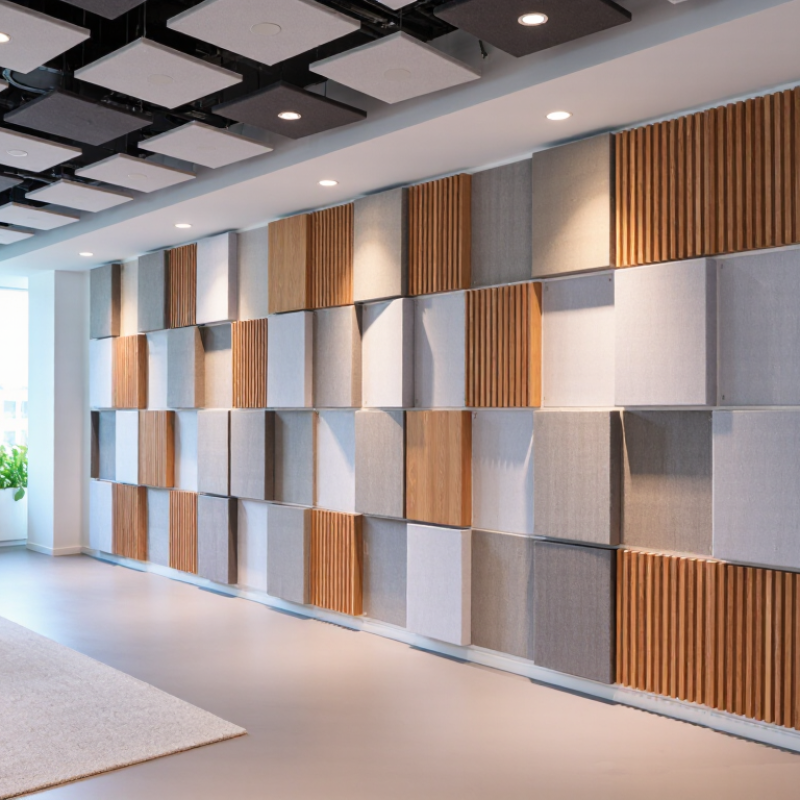
Experienced manufacturers usually begin with the room’s dimensions, ceiling height, wall finishes, and noise sources. They may recommend polyester fiber, fabric-wrapped, wood-slat, or perforated acoustic systems. The right solution should include tested acoustic data, stable construction, accurate color samples, and dependable installation guidance. Fire performance and environmental documentation also deserve careful review.

Small details matter. Panel joints should align cleanly. Edge profiles should resist fraying. Mounting hardware should remain secure after repeated cleaning. Some projects still choose products by appearance alone. That is a costly mistake. A beautiful panel can perform poorly in the wrong location.

China’s leading manufacturers combine engineering knowledge with production experience. Still, no supplier should promise perfect silence. Good acoustics require measured decisions, honest limitations, and thoughtful design. That is where Interior Acoustic Panels become genuinely valuable.

China Top Interior Acoustic Panels Manufacturer

Interior Acoustic Panels: NRC 0.60–1.00 and Sound Absorption Principles

Interior acoustic panels with NRC ratings from 0.60 to 1.00 can noticeably improve speech clarity in offices, classrooms, studios, and hospitality spaces. NRC, or Noise Reduction Coefficient, estimates average sound absorption at 250, 500, 1000, and 2000 Hz. It is rounded to the nearest 0.05. A panel rated 1.00 does not absorb every sound.

Porous panels work by allowing sound waves to enter their open structure. Friction converts part of that acoustic energy into small amounts of heat. Thickness, density, fabric openness, and mounting distance all influence performance.

A 50-millimeter panel with an air gap often absorbs more effectively than the same panel fixed tightly to a wall. Low-frequency noise remains difficult. It may require thicker treatment or carefully designed ceiling systems.

I have seen attractive rooms remain acoustically harsh because panels covered too little reflective surface. Placement matters as much as the rating. Panels near speech areas can reduce early reflections, while ceiling clouds help control sound across larger rooms. Independent testing under ASTM C423 or ISO 354 conditions provides useful evidence, but laboratory results cannot perfectly predict every installation. Room volume, furniture, occupancy, and gaps between panels change the result. NRC alone is not enough.

Panel Types, Materials, and Fire Ratings Under ASTM E84 and EN 13501-1

China Top Interior Acoustic Panels Manufacturer

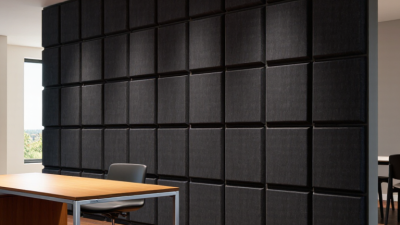
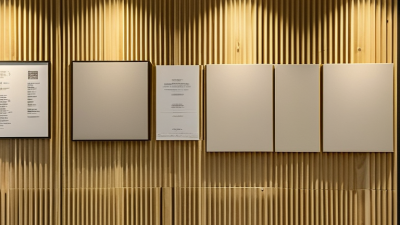
Interior acoustic panels must balance sound control, appearance, and fire performance. Common options include PET felt panels, fabric-wrapped boards, wood slat systems, and mineral wool cores. PET felt suits offices and education spaces. Fabric systems provide softer visual texture. Wood slats add warmth, but their backing and finish require careful review.

Materials affect both acoustics and fire behavior. Mineral wool usually supports strong fire resistance with a porous structure. PET panels can absorb mid and high frequencies effectively. However, recycled content, density, adhesives, coatings, and mounting gaps can change test results. No panel is perfect. That assumption deserves caution.

ASTM E84 reports flame spread and smoke-developed indexes. Class A generally indicates a flame spread index of 25 or less. Smoke performance must still be checked separately. EN 13501-1 uses classes from A1 to F, with additional smoke and flaming-droplet ratings, such as A2-s1,d0. These systems are not interchangeable. A Class A result cannot automatically become an EN classification.

An experienced China-based manufacturer should provide current laboratory reports, product specifications, installation details, and batch traceability. Verify the exact panel, thickness, surface finish, and adhesive system tested. Ask whether the rating covers the complete assembly. Real projects often expose small gaps between laboratory conditions and site installation. That is where careful technical review matters.

China Top Interior Acoustic Panels Manufacturer - Panel Types, Materials, and Fire Ratings Under ASTM E84 and EN 13501-1
Panel Type Common Core or Facing Material Typical Thickness Primary Acoustic Function Typical NRC Range* ASTM E84 Classification** EN 13501-1 Classification*** Typical Interior Applications
Fabric-Wrapped Acoustic Panel Glass-fiber or mineral-fiber acoustic core with acoustically transparent polyester or wool fabric 25–100 mm Broadband sound absorption, particularly in the mid and high frequencies 0.65–1.10 Class A
FSI 0–25; SDI ≤450
A2-s1,d0 to B-s1,d0 Offices, classrooms, meeting rooms, auditoriums and studios
PET Felt Acoustic Panel Thermoformed or laminated polyethylene terephthalate fiber, commonly produced with recycled PET content 9–24 mm Sound absorption with lightweight decorative and shaped-panel options 0.25–0.85 Class A or B
Subject to PET formulation and assembly
B-s1,d0 to B-s2,d0 Wall tiles, ceiling baffles, screens, clouds and decorative feature walls
Acoustic Foam Panel Open-cell polyurethane or melamine foam with profiled, wedge, pyramid or flat surfaces 25–100 mm High-frequency absorption and reverberation control 0.45–1.05 Class B or C
Depends strongly on foam chemistry and covering
B-s1,d0 to C-s2,d0 Recording rooms, broadcast spaces, practice rooms and equipment areas
Micro-Perforated Wood Panel Perforated or micro-perforated MDF, plywood or veneer-faced engineered wood with an absorptive backing cavity 12–25 mm panel; 50–200 mm cavity Resonant and broadband absorption; cavity depth improves low-frequency performance 0.45–0.90 Class A to Class C
Depends on substrate, veneer, perforation and mounting
B-s1,d0 to C-s2,d0 Conference rooms, libraries, hospitality interiors and cultural buildings
Grooved Wood Slat Panel Wood veneer or melamine-faced slats on a perforated backing with mineral wool or polyester absorber 15–40 mm slat system; 30–100 mm absorber Combined sound absorption, diffusion and architectural finish 0.55–1.00 Class A to Class C
Assembly-specific result
B-s1,d0 to C-s2,d0 Restaurants, offices, theaters, corridors and public interiors
Mineral-Fiber Ceiling or Wall Panel Mineral fiber or stone wool core with painted, textured or scrim-faced surface 15–40 mm High broadband absorption and ceiling plenum reverberation control 0.55–1.00 Class A
Common for noncombustible or highly fire-resistant constructions
A1 or A2-s1,d0 Open-plan offices, schools, hospitals, retail and transport facilities
Perforated Metal Acoustic Panel Perforated steel or aluminum face with mineral wool, glass-fiber or polyester infill 20–50 mm Durable broadband absorption with impact and cleanability advantages 0.55–1.00 Class A A1 or A2-s1,d0 Airports, sports facilities, industrial interiors, schools and transit areas
Acoustic Ceiling Baffle Vertical polyester fiber, glass-fiber, mineral-fiber or wrapped panel suspended from the ceiling 25–100 mm Two-sided absorption with increased exposed surface area 0.70–1.20 Class A to Class B A2-s1,d0 to B-s1,d0 High-bay offices, cafeterias, atriums, classrooms and production-free interiors
Acoustic Ceiling Cloud Suspended fabric-wrapped fiberglass, mineral fiber or PET felt panel with a rigid frame 25–100 mm Localized reverberation control below hard ceilings 0.70–1.15 Class A to Class B A2-s1,d0 to B-s1,d0 Open offices, multipurpose halls, classrooms and dining areas
Acoustic Room Divider Freestanding PET felt, fabric-wrapped mineral fiber or composite absorber with a supporting frame 20–100 mm Sound absorption plus visual zoning and partial speech privacy 0.35–0.95 Class A to Class B B-s1,d0 to C-s2,d0 Workplace zoning, libraries, coworking areas and education spaces
Technical notes: NRC values are representative ranges measured under ASTM C423 or comparable laboratory methods and vary with thickness, air gap, mounting method and frequency. ASTM E84 reports flame-spread index (FSI) and smoke-developed index (SDI): Class A generally corresponds to FSI 0–25, Class B to 26–75 and Class C to 76–200, with SDI typically limited to 450 for these classifications. EN 13501-1 classifications are based on the tested product and mounting configuration; A1 and A2 indicate limited or no contribution to fire, while the smoke and flaming-droplet suffixes describe smoke production and burning droplets. Final fire ratings must be confirmed through a valid test report or classification report for the exact panel, finish, thickness and installation assembly.

China Manufacturing Standards: ISO 354 Testing and ASTM C423 Performance

China Top Interior Acoustic Panels Manufacturer

China Manufacturing Standards: ISO 354 Testing and ASTM C423 Performance

Reliable acoustic panel production begins inside a controlled reverberation chamber. ISO 354 measures sound absorption through reveration-time changes. ASTM C423 reports absorption coefficients across octave bands and calculates the Noise Reduction Coefficient, or NRC. These results are not interchangeable. A panel may achieve strong mid-frequency absorption yet perform modestly at 125 Hz. That matters in restaurants, offices, and music rooms. Factory quality teams should record density, thickness, airflow resistance, and facing materials for every batch. One overlooked variable can weaken repeatability.

Grand View Research estimated the global acoustic panels market at about USD 9.4 billion in 2023. Its report also projected continued growth through 2030. This demand increases pressure for transparent testing, not only attractive surfaces. Responsible Chinese manufacturers can combine ISO 354 laboratory testing with ASTM C423 reporting. They should show octave-band data, mounting conditions, sample dimensions, and test dates. A single NRC number can mislead. It cannot describe every room. Installation still changes performance, sometimes substantially.

Tips: Request the complete test report, not a marketing sheet. Compare identical mounting methods. Check 125 Hz and 250 Hz results. Ask for batch inspection records. Better evidence beats louder claims. Some specifications remain imperfect, and engineers should review them honestly.

How to Evaluate a Top Manufacturer: Capacity, QC, Customization, and Lead Times

China Top Interior Acoustic Panels Manufacturer

A top manufacturer must prove capacity, not merely display a large workshop. Request monthly output, machine lists, worker shifts, and recent delivery records. A practical audit should trace one order from cutting to packing. Watch for stacked panels, idle machines, or manual color matching. These details often reveal production limits.

Quality control should include incoming fiber checks, dimensional tolerances, surface inspection, and batch documentation. ISO 354 measures sound absorption in a reverberation room, while ASTM C423 reports absorption performance in the United States. Ask for current laboratory results, not generic brochures. The World Health Organization recommends indoor bedroom noise below 30 dB(A) at night. Therefore, a supplier should discuss room conditions, not promise one universal NRC value. No factory is perfect. Testing can still miss installation errors.

Customization requires engineering discipline. Confirm drawings, fire classifications, edge profiles, fabric colors, recycled content, and mounting systems before production. Samples should match mass-production materials. A reasonable planning benchmark is 7–10 days for samples and 20–35 days for standard production after approval, though complex finishes may take longer. Ask how capacity changes during peak seasons. A delayed approval can matter more than factory speed. Industry market forecasts, including recent acoustic-panel studies from Fortune Business Insights, show continuing global demand, but market growth does not guarantee dependable delivery. Choose documented controls over impressive claims.

Applications, Installation, and Reverberation Targets for Offices and Public Spaces

China Top Interior Acoustic Panels Manufacturer

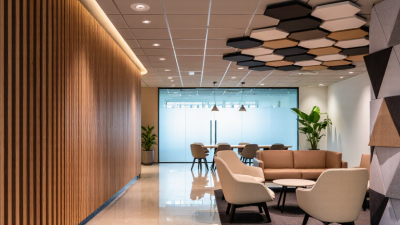
Interior acoustic panels work best when matched to the room’s actual use. In open offices, ceiling clouds and wall panels reduce speech reflections near desks. Meeting rooms need balanced absorption, not complete deadness. For lecture halls, panels should control rear-wall echoes while preserving useful sound energy. ISO 3382-1 and ISO 3382-3 provide recognized methods for measuring reverberation and speech propagation.

Design teams commonly target 0.6–0.8 seconds for offices and 0.5–0.7 seconds for small meeting rooms. Public lobbies may accept 1.0–1.5 seconds, depending on volume and activity.

These ranges are practical references, not universal rules. The World Health Organization’s Environmental Noise Guidelines recommend classroom sound levels below 35 dB(A), showing why reverberation control supports concentration.

Quiet matters.

Installation changes performance. Leave small air gaps behind wall panels when possible; the cavity can improve low-frequency absorption. Covering only one wall often leaves ceiling reflections untouched. A measured layout is safer.

Panels should be distributed across ceilings, sidewalls, and rear surfaces, while avoiding blocked sprinklers, lights, or ventilation. ISO 354 laboratory ratings cannot fully predict site results. Furniture, people, glass, and unfinished concrete still matter. In practice, many projects under-treat hard ceilings. That mistake remains common.

Post-installation testing can reveal uneven decay, poor speech clarity, or excessive deadness, allowing adjustments before the space becomes expensive to revise.

Write your message here and send it to us.